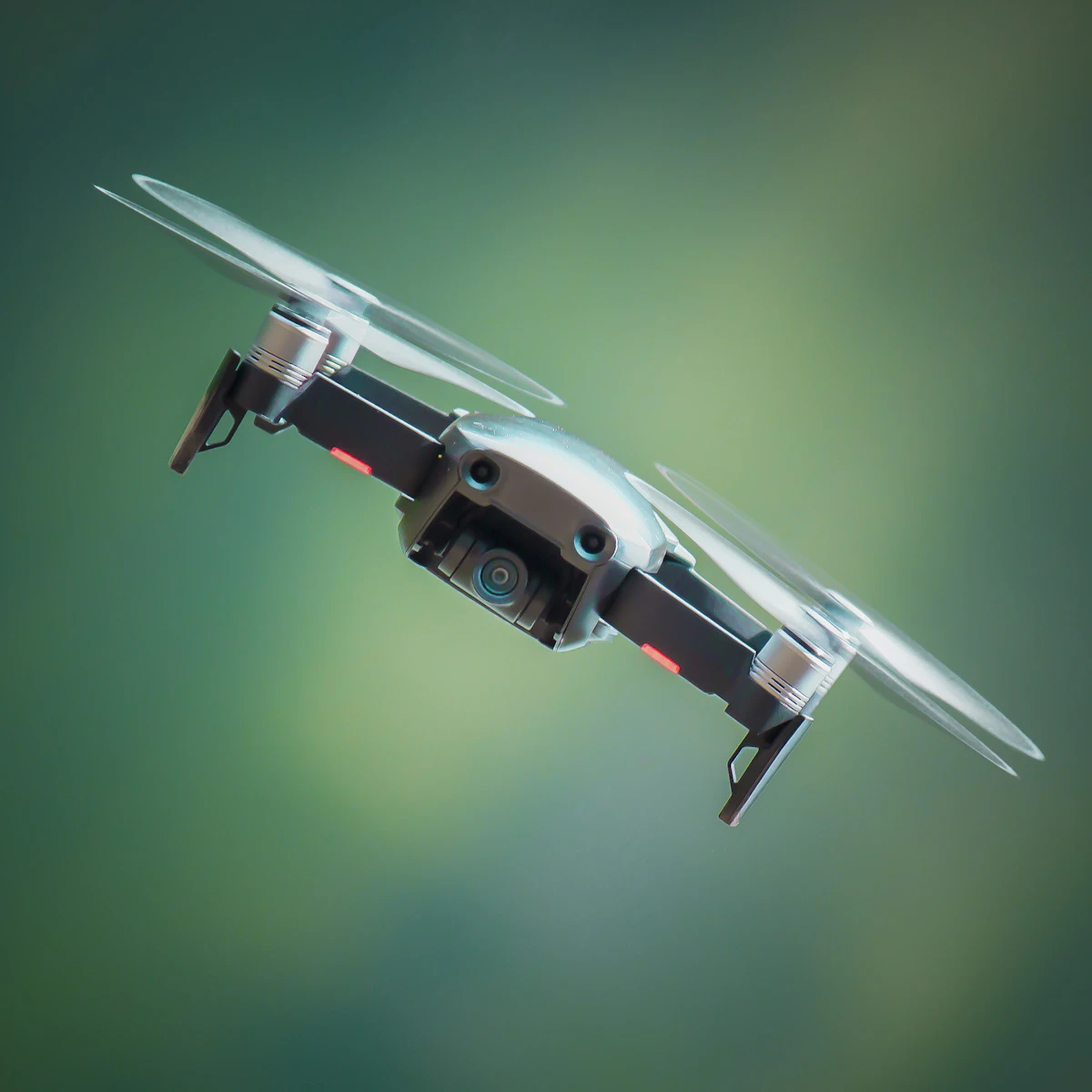
Autonomous Unmanned Aerial Vehicle (UAV) swarms represent one of the most critical frontiers in modern cyber-physical defense, emergency disaster response, and infrastructure inspection. As swarms operate in decentralized ad-hoc wireless environments (FANETs), they rely heavily on mutual authentication and cryptographic message exchanges to coordinate trajectories and detect malicious agents.
The Quantum Threat to Public-Key Cryptography
Traditional public-key cryptographic primitives—such as RSA and Elliptic Curve Cryptography (ECC)—derive their security guarantees from the hardness of integer factorization and discrete logarithms. However, Shor’s algorithm on sufficiently capable quantum computers mathematically renders these mathematical assumptions obsolete in polynomial time.
"In critical infrastructure protection, a security vulnerability fixed five years late is an open door today. Autonomous swarms deployed in long-term surveillance must be designed with post-quantum resilience from day one."
Lattice-Based Cryptography in Constrained Swarms
The primary engineering challenge when deploying Post-Quantum Cryptography (PQC) on UAVs is resource constraints. Drones possess finite onboard battery storage, limited compute cores, and tight latency deadlines (often requiring under 15ms handshake latency for high-speed flight collision avoidance).
Recent NIST-standardized lattice-based schemes (such as ML-KEM and ML-DSA) offer promising security tradeoffs. By integrating lightweight hash-based signatures and decentralized blockchain consensus for verifiable frequency-hopping schedules, swarms can withstand both quantum eavesdroppers and classical GPS spoofing simultaneously.
Implementing Telemetry Validation & Anomaly Detection
Below is an illustrative Python implementation showing how edge UAV nodes execute real-time physical-layer anomaly filtering before initiating lattice-based key exchanges:
import numpy as np

class SwarmTelemetryValidator:
    def __init__(self, node_id: str, threshold: float = 2.5):
        self.node_id = node_id
        self.threshold = threshold
        self.baseline_rssi = -65.0  # dBm reference at 1 meter

    def verify_telemetry_vector(self, relative_coords: tuple, reported_rssi: float) -> bool:
        """
        Detects GPS spoofing by cross-referencing signal strength attenuation
        against expected geometric propagation distance.
        """
        expected_loss = self._calculate_path_loss(relative_coords)
        z_score = abs(reported_rssi - (self.baseline_rssi - expected_loss)) / 3.0

        # Flag physical-layer anomaly if deviation exceeds threshold
        if z_score > self.threshold:
            print(f"[SECURITY ALERT] Node {self.node_id}: Telemetry anomaly detected (Z-Score: {z_score:.2f})")
            return False

        return True

    def _calculate_path_loss(self, coords: tuple) -> float:
        # Free-space log-distance path loss approximation
        distance = np.linalg.norm(np.array(coords))
        return 20.0 * np.log10(max(distance, 1.0))
Key Takeaways
- Decentralized Verification: Swarms cannot rely on centralized ground station servers that introduce single points of failure.
- Quantum-Resilient Handshakes: Transitioning from ECC-based ECDH to lattice-based key encapsulation mechanisms (KEM) is essential for long-term data confidentiality.
- Multi-Layered Defense: Combining machine learning-driven physical layer anomaly detection with cryptographic integrity guarantees highest fault tolerance.